Statement of Purpose
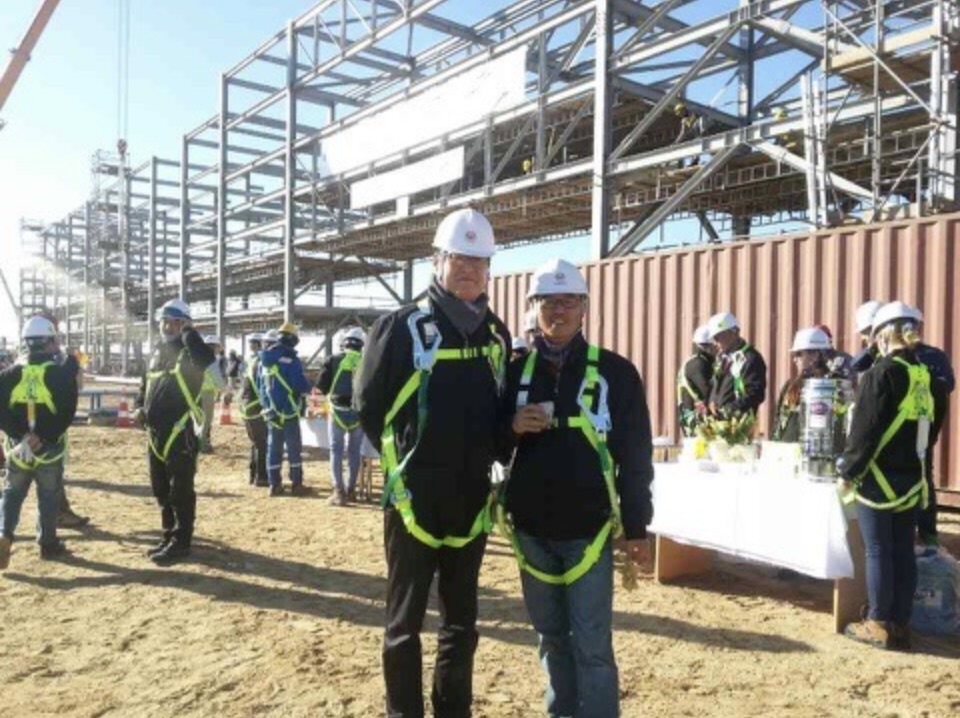
To me, the image of a plant was that of an immensely large intricate near-perfect machine operated with utmost precision – perfectly aligned facilities, 365x24 non-stop operation with robots and automation.
But then, I was utterly shocked after hearing about the realities of plant construction and operation from none other than my own father, an expert who devoted himself to the construction of oil refinery plants for over 30 years.
The stories he brought home were very different from what I had imagined in the beginning.
What was most interesting is that in the field, no matter how good certain technologies may be, for instance, they are sometimes shoved aside for various reasons like cost, field conditions and so forth.
As such, I am interested in conducting research not only on technology excellence, but also the gap between the so-called textbook knowledge/theories and the field. And I thought that the cores for explaining this gap are data and decision-making – which are the starting points for my future research.
Moreover, a long list of questions emerged as a result including, “how to make the just-right decisions amidst uncertainty, when there is never sufficient data?”
Later, while asking these questions, I realized that these are all related to decision making under uncertainty that are covered by the statistics and Machine Learning.
In sum, my questions can be categorized into three core issues; 1) ability to discern which data is important or not admidst so many different variables and fast at that, 2) ability to make better decisions with limited data and, 3) ability to build an eco-system that can support good, optimal decision-making even when external factors are not optimal (eg. noise).
As such, I am knocking on your door to study and to conduct research on the following topics.
High-Dimensional Inference
A major challenge in decision-making is that there are simply too many "candidate" variables to consider.
At the same time, gathering all kinds of information to analyze is not only costly but also time-consuming. Likewise, I would like to study the effect of key variables on decision-making results after learning to discern the significant variables first and foremost. For instance, in pricing, I am interested in identifying which variables, such as the seasonality of promotions and competitors’ prices, influence decision-making.
This interest naturally leads me to the problem of high-dimensional feature selection, together with valid inference. In operational settings, this issue also arises when variables such as team tendencies, cooperation styles, or technology-specific characteristics are difficult to measure but may substantially affect decision outcomes. The central question is how to identify decision-relevant signals while quantifying the uncertainty surrounding that identification.
For this goal, I also need to study the methodologies required to answer my questions, such as, “Which test is needed to identify significant variables in high-dimensional data with limited information?”
As we all know, in statistics, there are various methods for estimating the influence of a variable on an estimate, including Cook’s distance, the coefficient of determination, and Fisher’s correlation. However, these measures of influence require more data than the number of dimensions in high-dimensional settings and are computationally inefficient. It is well known that in high-dimensional settings with limited data, it is impossible to test whether a specific variable is significant (i.e., whether its parameter coefficient is zero or not).
Currently, in a high-dimensional and sparse setting, I am conducting research on the early detection of high-influence variables that change the decision-making results in actuality by studying feature selection methods.
To advance this research, I am interested in an approach based on the information-theoretic limits on sparsity recovery in the high-dimensional and noisy setting (Wainwright, 2009). Building on this work, I hope to develop a convergence test that, by appropriately adjusting the weights of the given data, can determine whether the coefficient of a specific variable is zero under proper assumptions. This approach can be applied to so many different areas including autonomous driving and robotics, where image and motion-related data are high-dimensional and feature selection must be performed quickly.
Adaptive Experimental Design
Beyond identifying which variables matter, I am also interested in how the relevant data should be collected.
I first realized how different real-world study design could be from what I had learned in class when I joined an industry consultation with a company involved in laboratory and nonclinical testing. Until then, I had thought of experimental design would be relatively straight forward: decide how many samples are needed, collect the data, and analyze the results. But the actual case was much more complex. The company already had a large amount of experimental data, yet some of it had been collected for different purposes or under different conditions, and some could not even be reused because of contractual restrictions. That experience made me realize that having a lot of data does not necessarily mean having the right data, and that designing a real-world study in practice can be much more complicated than it looks in a textbook.
That experience also made me think about how the challenge of obtaining the right data becomes even more consequential in real-world settings.
Motivated by this experience, I need to study how data are collected. All too many times while working on many projects, I witnessed instances in which data was collected with no clear goal set in the beginning. As such, very often than not, there was extensive waste in the data collection process. My goal is to minimize such waste by studying ways to mastermind just-right data plan survey selectively and smartly to identify appropriate sample pool for instance. As such, I need to study from the bandit/online learning/sequential optimal design perspective (Tao et al., 2018) to identify which experiment to carry out to improve policy, and how to ensure optimal exploration-exploitation trade-off along the way.
Robust Sequential Learning and Inference
The difficulty becomes even greater when the data available today are either scarce or no longer representative of the environment in which future decisions must be made. The moment a new technology is adopted, there is often a lack of data and virtually no historical data. As such, it is essential to make smart assumptions based on existing data from similar technologies. However, there are many instances in which the data cannot be applied directly. Moreover, as everything changes so fast, past data may no longer be relevant, thus hindering good decision-making for the future. In other words, data may be insufficient, while existing data may no longer be relevant for forecasting, risk identification, and so forth. To me, this was not only a question of forecasting precisely at a particular point in time. Instead, it seemed to be more of a question of which data to trust and which data to examine as a priority.
We all know that the real-world data inevitably causes prediction results to fluctuate due to noise, missing values, heavy tails, and shifts in distribution. However, what matters is not the prediction itself, but how robust the results of the policies that are made, using those predictions remain.
Therefore, I will study whether it is possible to design learning and optimization methods that are robust to changes in the data distribution while making sure that the optimal decision-making can be made with minimal data, and for this, I also need to study different forms of performance guarantees such as regret bounds or constraint violation control.
Towards this end, I also need to study reinforcement learning and sequential adaptive learning. In content recommendation, for instance, these methods must adapt to users’ changing preferences every second, especially as they change so often, so fast these days. This motivates my interest in contextual bandit methods that adapt to non-stationary environments (Luo et al., 2018).
Another question I have is whether it will be possible to perform learning and decision-making while controlling data for bias even when feedback is partially or selectively observed (action-dependent missingness). From what I know in the field of missing data, the doubly robust method is utilized extensively to obtain semi-efficient and unbiased estimates (Bang & Robins, 2005); however, its theoretical guarantees are often asymptotic, which limits its applicability to sequential decision-making problems with limited data(nonasymptotic).
In a manuscript I am currently co-authoring with my advisor (Sim & Kim, 2026), we address this issue in a multi-armed bandit setting where each arm’s reward distribution remains fixed over time. Rather than selecting the best arm based solely on its mean reward, we establish a new dominance score that partitions the reward space into regions where different arms are locally dominant and aggregates these comparisons across the entire distribution. To estimate this score when only the reward of the selected arm is observed, we combine current observations with recycled exploration samples and construct a doubly robust estimator that simultaneously estimates the reward distributions of all arms. Based on this estimator, we develop an elimination algorithm that identifies the arm with the highest dominance score at a desired confidence level, with a sample-complexity bound that matches the theoretical lower bound up to logarithmic factors.
With this in mind, I would like to study how recycled exploration samples should be weighted when reward distributions change over time, and how this affects the reliability and sample efficiency of selecting among competing actions. This line of research could help improve decision-making when current reward observations are limited and previously observed samples may no longer be fully representative of the current reward distributions.
All these are why I need you. With the right set of training, I know that I will walk out with many answers to these questions, supported by the set of qualities that will ensure the successful completion of my PhD program.
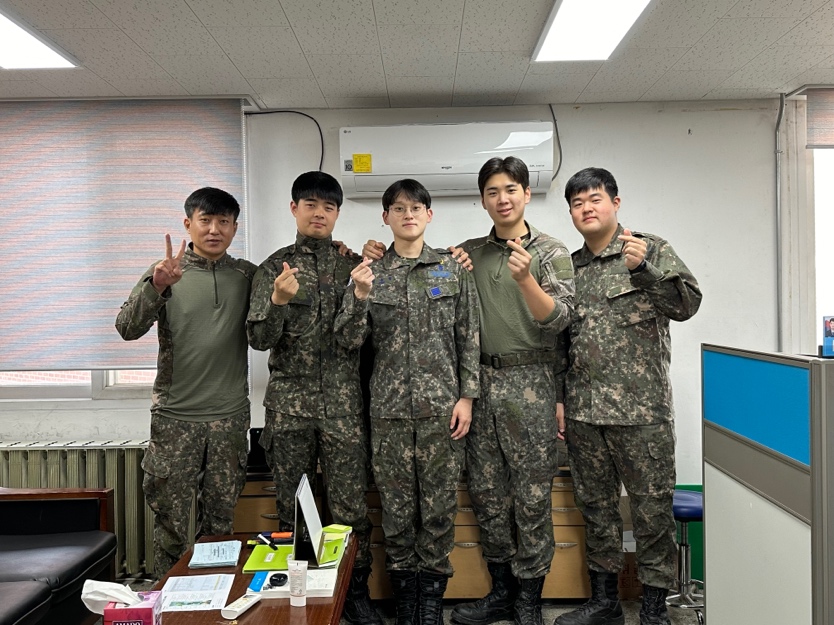
First and foremost, I am passionate about our field, which, to me, entails streamlining for maximum efficiency. As such, I volunteered to serve at a warehouse (SCM) in the military.
From socks to spinach, I managed at least 1,000 products while in the military. For two years at an Air Force base, I was responsible for managing all items, materials, and equipment – a position that I volunteered for because I have always been a management buff.
But to be honest, I almost regretted my decision on Day 1 because the warehouse I saw was messy and dirty, and dust had piled up on the goods since no one had been responsible for the job.
Thus, for the next two years, I worked day and night to leave behind an impeccably and beautifully managed warehouse, to the point that I often wondered whether I was a soldier, a sweeper, or an SCM specialist.
But it was the most fun and fulfilling experience. Nothing compared to the joy of seeing every process flow impeccably. I also walked away with many lessons, like how complex operations can be when handling everything from A to Z, from warehousing to inventory control, especially while forecasting demand. Moreover, having to keep records in line with those of other government offices on a real-time basis was challenging and time-consuming because the goods were constantly moving targets.
Meanwhile, having to work with very volatile factors like politics, SCM emergencies, and weather was especially difficult, as our base was located deep in the woods. Even the weather forecasts were not entirely reliable. Thus, if there is anything I learned, it is that anything can go wrong.
But when everything is tallied, and I think about my experience, it was a blessing in disguise, as I had the chance to work with SCM at possibly the largest organization in Korea (the military is certainly larger than Samsung)
Also, I am sure that most, if not all, organizations, whether private or public, experience the same. Thus, I am ready.
And in many ways, my military experience continues to help me today. I am now an undergraduate RA at the SIAI Lab at my alma mater. At this lab, I learned so much because although we are eight members today, a year ago, there were only two desks (my advisor’s and mine, since I am the first lab disciple of my advisor, who joined the faculty fresh out of a PhD program).
Thus, together, we set up the lab, literally speaking. During the “founding” days, we held marathon meetings, just the two of us, to set up the direction of our research. We also experienced many trials and errors, which, now that I think about them, were my other “teachers,” as I learned by doing and mulling over the reasons behind our failures and mistakes.
It wasn’t easy building a lab together, especially since I was taking so many classes on the side. In fact, I must have set the record: I completed 165 credits because I was so eager to learn. But then, hitting the books and devouring papers after a full day at the lab was challenging.
But I truly loved those busy days and our many discussions. And along the way, I found out something about myself as well: I love research.
Now, I am headed in that direction. I want to devote myself to research as a professor and scholar who never ceases to work in the field, whether in a plant for a fashion company or a semiconductor plant.
References
[1] Wainwright, M. J. (2009). Information-theoretic limits on sparsity recovery in the high-dimensional and noisy setting. IEEE Transactions on Information Theory, 55(12), 5728–5741.
[2] Tao, C., Blanco, S. A., & Zhou, Y. (2018). Best arm identification in linear bandits with linear dimension dependency. In Proceedings of the 35th International Conference on Machine Learning (Proceedings of Machine Learning Research, Vol. 80, pp. 4877–4886).
[3] Luo, H., Wei, C.-Y., Agarwal, A., & Langford, J. (2018). Efficient contextual bandits in non-stationary worlds. In Proceedings of the 31st Conference on Learning Theory (Proceedings of Machine Learning Research, Vol. 75, pp. 1739–1776).
[4] Bang, H., & Robins, J. M. (2005). Doubly robust estimation in missing data and causal inference models. Biometrics, 61(4), 962–973.
[5] Sim, J., & Kim, W. (2026). Dominant arm identification with mixing and recycling observed samples. arXiv preprint, arXiv:2608.01545.